

Kundry, Parsifal
Staatsoper Stuttgart
“Rosie Aldridge is sensational, as is her strength and transparency as the only woman in the Grail Temple. A seer, mother figure, whore and saint, the projection screen for all male fantasies.”
Heilbronner Stimm City Edition
“Rosie Aldridge gave a multifaceted Kundry with a colourful voice possessing seemingly inexhaustible reserves and a dramatic, at times drastic, delivery that clearly demonstrated how close Wagner had come to the gateway of expressionist musical theatre.”
Der Klassikkritiker
“Rosie Aldridge captures Kundry in an electrifying portrayal. Her witch-like Kundry in the second act is fiery, but also very intimate in the lyric passages. Aldridge has a beguiling, striking slimness and tonal colour variability that is so rarely heard.”
Online Merker
“Rosie Aldridge as Kundry outshone the ensemble with vocal complexity and a performing presence that oscillated between vulnerability, fury, and inner emptiness.”
Chor Gesang – Das Musikmagazin
“Rosie Aldridge also played Kundry with great skill, singing her role appealingly with a syrupy, well-supported mezzo-soprano and assured top notes.”
Der Opern Freund
“Another role debut comes from English mezzo-soprano, Rosie Aldridge. Her voice is smooth and conversational, lending a distinctive, spoken quality to the cursed Kundry. No need for subtitles here; every word is crystal clear. This isn’t by accident. When she shifts into seduction mode, attempting to lure Parsifal, her voice transforms – becoming more sung, more dramatcic, as if she’s performing Verdi instead of Wagnre. It’s a subtle yet effective shift that highlights her vocal versatility. Her voice is impressively balanced, with a deep richness that can also soar to higher, lighter notes – nearly impossible to resist.”
Blogfloejten
“Mezzo-soprano Rosie Aldridge is the most convincing. She sings a fiercely acting Kundry with strong intonation in the high notes, whose dual existence as a contemporary witness of Golgotha in need of redumption and a compliant creature of the renegade Klingsor is convincingly portrayed.”
Ludwigsburger Kreiszeitung
“The English mezzo-soprano, Rosie Aldridge, enjoyed great success here at the State Opera with her interpreations of Kostelnička. Given such a long and difficult roles as Kundry, revealing her temperament in the second act, which was truly remarkable for its dramatic intensity and expressiveness, both vocally and theatrically.”
Mozart2006
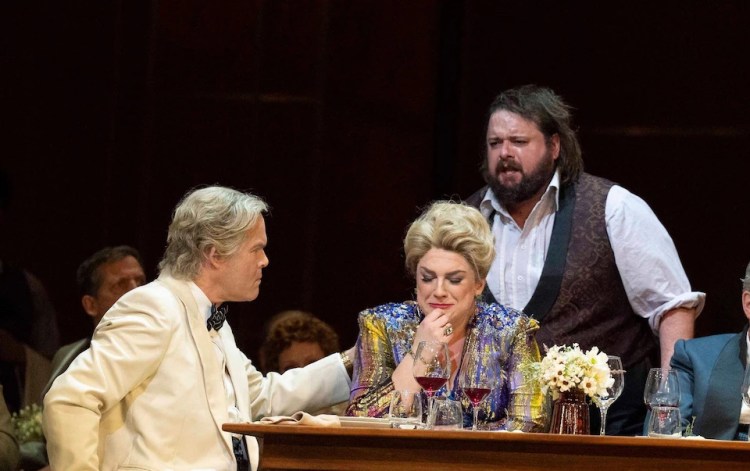
Else, Festen
Royal Opera House
“Special praise must go to Rosie Aldridge who performs brilliantly. When Aldridge lets out the most harrowing scream upon Helge’s (Gerald Finley) presumed death, it is a scream of many complexities – of grief, regret, embarrassment. Does she love her husband? Does she love her children? This is nuance of the highest order in which Aldridge excels. Brava to this bystander matriarch.”
The Critic
“Helge’s wife, a hurricane force Rosie Aldridge, silently becomes her own conundrum. Revealed to have been aware of her husband’s grim perversions, her silence is more than complicity but enablement.”
Broadway World
“[Aldridge] contributes one of the opera’s most electrifying moments.”
Geoff Andrew
“Rosie Aldridge gives stature to the conflicted mother, Else.”
Financial Times
“Warm-toned mezzo Rosie Aldridge, who impressed as Mrs Sedley, the town snooper in Deborah Warner’s Peter Grimes, plays Else, Helge’s wife and mother to the children. Always protective of her husband and dismissive of her children, she manages her character’s journey with aplomb, from gracious hostess to uncontrollable screams as Helge is given a beating by Michael.”
London-Unattached
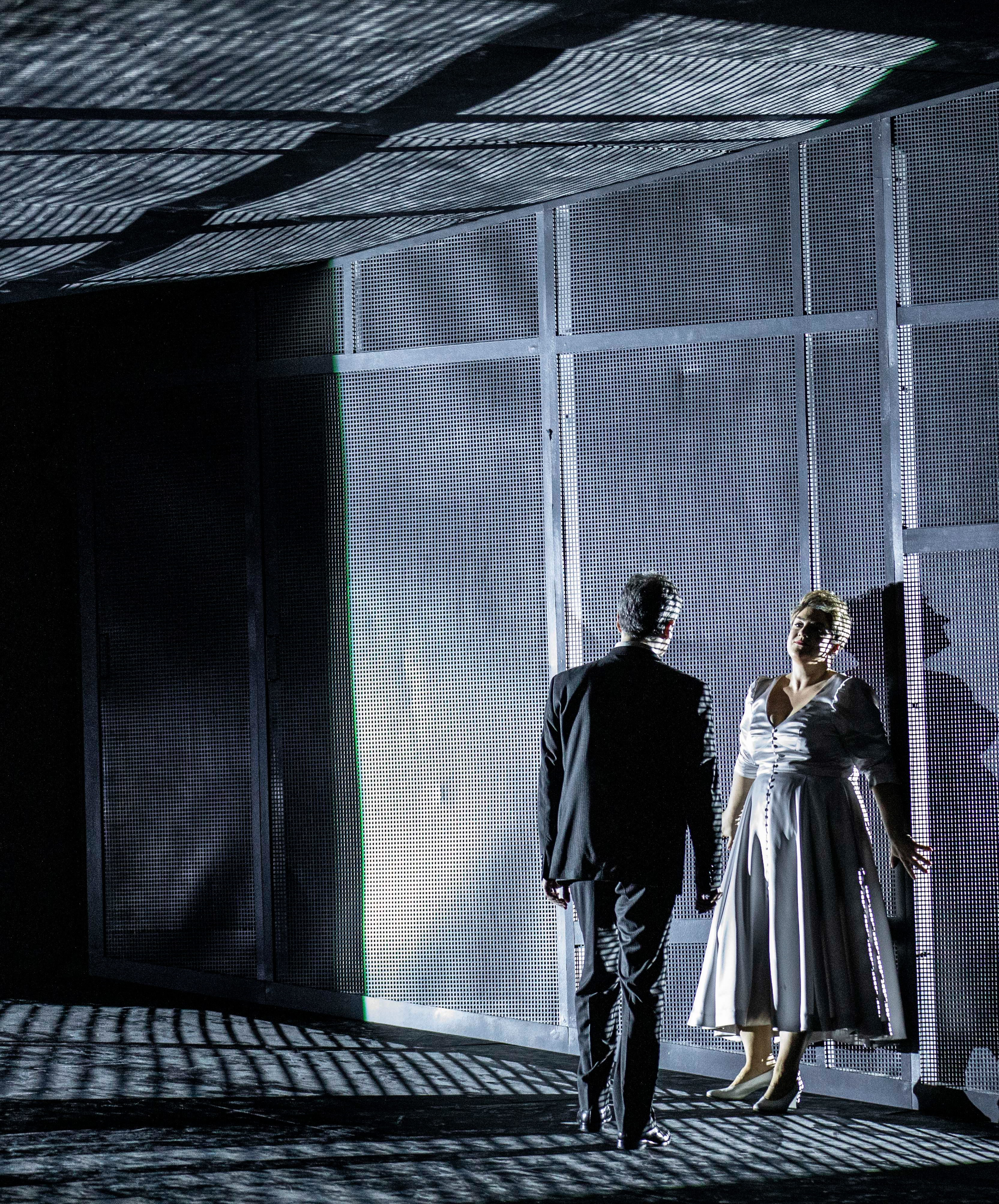
Judith, Bluebeard’s Castle
Opera National de Lorraine
“Rosie Aldridge, a striking Sister Klementia reliving, at the whim of her young companion’s fall, the guilt of an old trauma, embodies a magnificent Judith in Bartok. A powerful and well-projected voice, with peremptory high notes, the British mezzo-soprano plays with pitfalls of a role that demands as much sensuality as fierce determination.”
Le Monde
“Rosie Aldridge is an exquisite Judith, slipping into her character, going from mischievous curiosity to absolute anguish.”
Magazine Poly
“Rosie Aldridge’s sensual vitality and powerful vocals collide with a Bluebeard who is almost touchingly sympathetic.”
NMZ
“In this sparse setting – like a black and white Hitchcock thriller – Aldridge is such a great Judith vocally that you definitely give her the win. Whether fortissimo or withdrawn, her voice remains round, balanced and, above all, beautiful in sound.”
Klassik Favori.de
“In the guise of an almost inquisitive Judith, she lends her powerful and percussive mezzo, crowned with an easy and triumphant high C.”
Olyrix
“Rosie Aldridge’s voice is powerful and well projected… she embodies the sensuality of the lover, the fear of the young woman, as much as the authority of the heroine. It triumphs over all the rigours of the score by crowning everything with a peremptory high C held at the opening of the fifth door.”
Forum Opera

The Witch, Hänsel und Gretel
Royal Opera House, Covent Garden
“When I last saw Rosie Aldridge in a production of Hansel and Gretel she was performing the role of the put-upon Mother in ENO/Regent’s Park’s collaboration in June 2019. Here she was transformed from a portrait of flawed motherhood to the epitome of freakish monstrosity – a brilliantly bravura Witch who stole the show: garish costumes, commanding gestures, vocal splendour and all. It was almost a shame to witness her demise by chocolate.”
Opera Today
“As the Witch, Rosie Aldridge threw caution to the wind and proved to be the standout performance of the night. When she appeared the stage suddenly bristled with energy, which came as a welcome relief after the torpor that had gone before – her rich, fruity mezzo suited the role to perfection.”
MusicOMH
“It is Rosie Aldridge, however, who rips up the production book and whips up a storm as the lip-smacking Witch. She brings the stage alive through the gleeful force of a personality – hers or her character’s, it matters not which – that persists right through to her scene-stealing curtain call.”
Bachtrack
“Rosie Aldridge’s Witch, a rich-voiced pantomime dame, making the most of every moment, provides a theatrical star turn!”
The Guardian
“…in fact, the scenes at the house are the production’s strongest, thanks to Rosie Aldridge’s punchily characterised, spicily sung witch. Dressed – and nicely undressed – in zesty costumes, she has wit and, most especially, a precision oddly lacking elsewhere.”
The Stage
“Rosie Aldridge as the Witch is hilariously tongue-in-cheek villainous; it’s always intoxicating when she’s on stage and shown to be absolutely in charge – right up until the very last moment, that is. “
Broadway World
“Rosie Aldridge is a fun but venomous Witch – a vast improvement on the gender-swapped casting in 2018.”
The Times
“The Witch is usually a chance to show a dazzling characterisation and Rosie Aldridge didn’t disappoint. Alongside Aldridge’s excellent tone and projection, she portrayed a gleefully malicious witch with the capacity to swing into unstinting villainy, emerging at first as a gingerbread baking vision of pink puffs and peppermint gingham.”
London Unattached

Kostelnička, Jenufa
Deutsche Oper am Rhein
“Rosie Aldridge is outstanding as the sexton – what she offers in terms of acting and singing with the greatest demands and astonishing stage presence is top class.”
Rheinische Post
“Rosie Aldridge shone as the sexton with her polished, sometimes powerful, sometimes tremblingly passionate mezzo-soprano… It is Rosie Aldridge’s portrayal of struggling with oneself that makes the dilemma so authentic.”
Oper Magazin
“Rosie Aldridge performs brilliantly as the sexton and stepmother of Jenufa… despite all the intensity, her voice does not become sharp. This is also why the character remains ambivalent, far more so than the malicious child murderer who is concerned about the family’s reputation – you believe the character’s conflict of conscience.”
Online Music Magazine
“In a major performance of the opera “Jenufa”, emotions run so high that in some moments Rosie Aldridge stops singing and shouts. It’s outrageous. Aldridge plays the oversized role of the sexton with just as much force as the title heroine, Jacquelyn Wagner, two singers with reserves of strength and the courage to throw everything into such an undertaking. The sexton must and may perhaps always sing her heart out a little more, and Aldridge’s mezzo does this exuberantly, as Jenufa’s stepmother is the tragic centre of the action – it is not for nothing that Gabriela Preissová’s play, on which the libretto is based, is called “Her foster daughter”, thus combining both women in a way that is appropriate to the plot (it was only with Max Brod’s translation that the title “Jenufa” gradually became established; Janácek and Brod had previously discussed the meaning of the Czech word “pastorkyna” extensively. ”
Frankfurter Rundschau

Kostelnička, Jenufa
Staatsoper Berlin
“In her house debut, Rosie Aldridge as the Kostelnička was absolutely mesmerising, the heart and star of this opera. Her acting, her voice, I was floored by her, seeing her perform this just the once was nowhere enough. In Act 2 and 3 in particular it was a real tour de force performance.”
The Stuart Review
“A remarkable cast, dominated by Vida Miknevičiūtė and Rosie Aldridge… the tormented creature that is the sacristan Buryjovka. Played by Rosie Aldridge, she gives us intense moments of singing.”
Résonance Lyriques

Kostelnička, Jenufa
Staatsoper Stuttgart
“Mezzo-soprano, Rosie Aldridge, makes the Kostelnichka Buryjovka musically and playfully breathtaking… Doubtful. Despairing. Full of energy. Spirited. Determined. Attractive. Looking into the abyss of hopelessness. Her powerful voice sings all of this into my heart. Her acting pierces my heart. A chill runs down my spine… [She] presents this character in a truthful, frighteningly relatable, achingly perfect way. Rosie Aldridge burns this evening into my memory with an outstanding performance”
Klassik begeistert
“Rosie Aldridge delivered a brilliant acting performance in the role of Kostelnicka, which she also sang magnificently with a clean, impasto mezzo-soprano and impeccable top notes.”
Der Opern Freund
“Particularly noteworthy is the British mezzo-soprano Rosie Aldridge, who gives her sexton a truly existential, fateful presence, both vocally and scenically, and with this splended singing performance, she also gives additional format to Bieito’s production of the opera, which premiered in Brno in 1904 and was title ‘Your Foster Daughter’ in the Czech original.”
Ludwigsburger Kreiszeitung
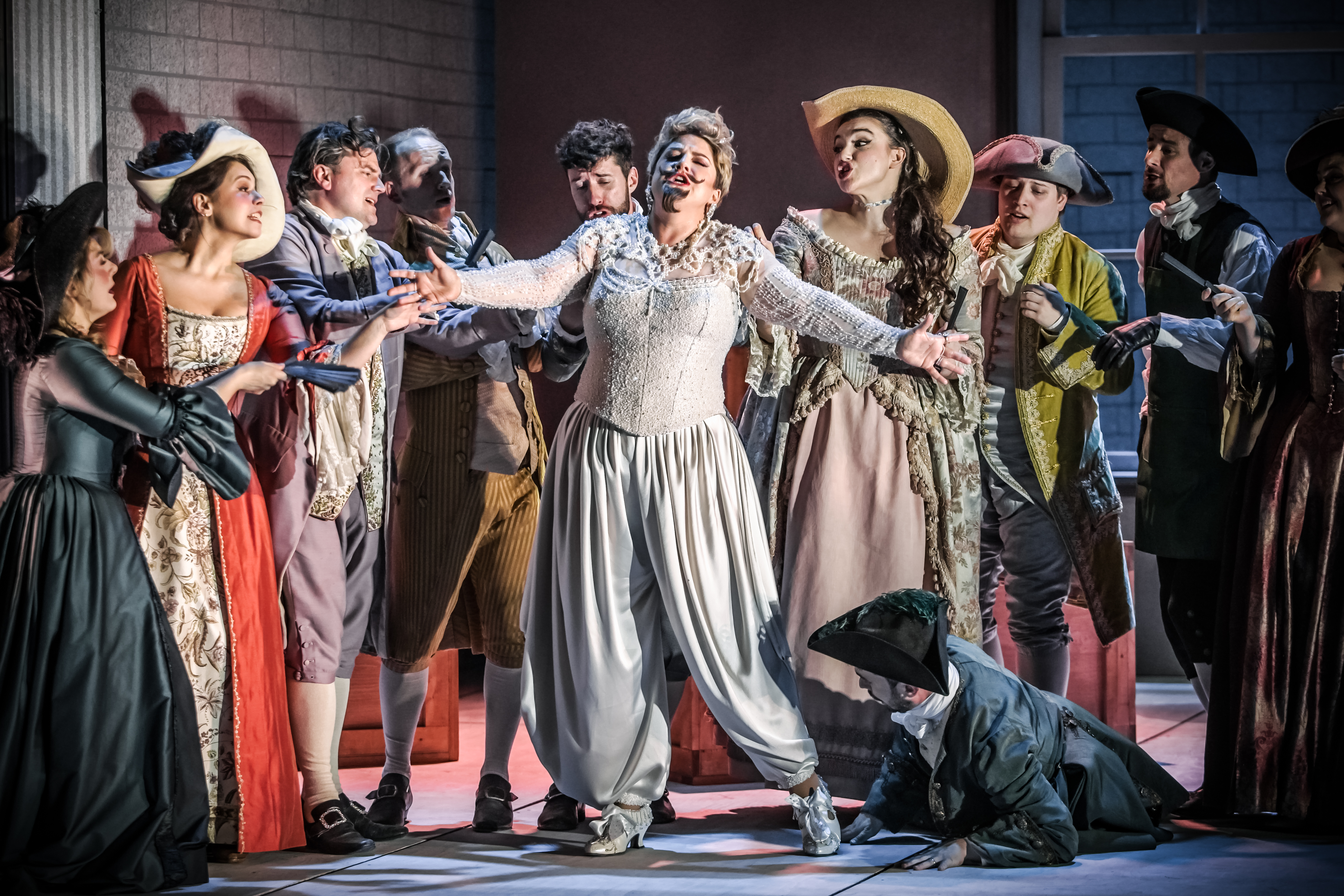
Baba the Turk, The Rake’s Progress
The Grange Festival
“Rosie Aldridge’s Baba was a force to be reckoned with – physically assured and armed with a magnificent chest voice, her comic timing precise.”
The Guardian
“Rosie Aldridge was the audience’s favourite as Baba the Turk, her rich mezzo surmounting all the challenges of the part and reminding us that Baba is not only generous towards Anne but represents the independence of the performer.”
Music OMH
“Rosie Aldridge’s Baba the Turk bursts with character, her beard and moustache impeccably coiffed.”
The Times
“Adding to the evening’s gold-standard quality [is] Rosie Aldridge’s Baba the Turk – a bearded lady combining panache with warmth, rather than a comic-grotesque caricature.”
The Stage
“Rosie Aldridge played Baba with wonderful aplomb, playing up the character’s drag-queen-like characteristics with her over-the-top manner and visual bravura, and she sang with tones to match. She made an extremely likeable Baba.”
Planet Hugill
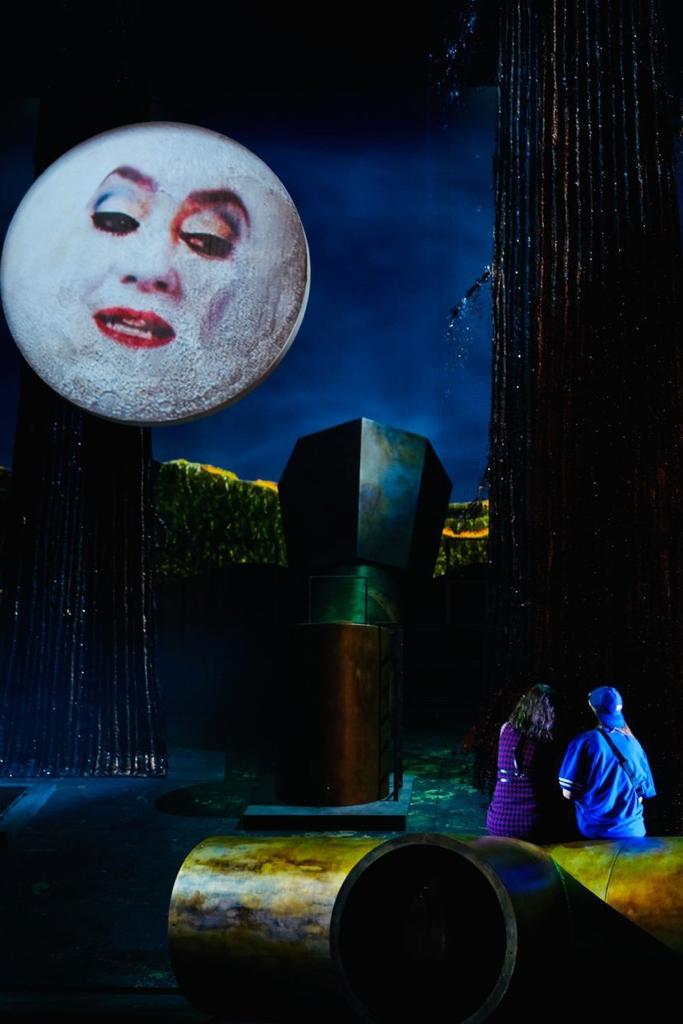
Die Hexe, Hänsel und Gretel
Staatsoper Stuttgart
“Vocally, Rosie Aldridge masters The Great Witch 101: the timbres of dissimulation, furious high notes, malicious bursts of laughters: every note saturated with evil ulterior motives. A terrific performance.”
Reutlinger General-Anzeiger
“As the witch, Rosie Aldridge delivers an excellent portrait of a psychopathic narcissist: dazzling, fascinating and completely devoid of empathy.”
“Rosie Aldridge has completely grown into the role of the witch, she is so slippery that you no longer know whether she is evil herself or just part of an inhuman system.”
Stuttgarter-Nachrichten
“As expected, Rosie Aldridge cleans up as the witch.”
Münchner Merkur
“Above all, Rosie Aldridge delivers a spot on role portrait.”
Südkurier Konstanz
“As The Witch, the experienced Rosie Aldridge won over the audience with radiant top notes.”
Oper International

Baba the Turk, The Rake’s Progress
Glyndebourne
“It was Rosie Aldridge as Baba the Turk who stole the show. A genuine singing actor, she provided the complete package of humour, pathos and forgiveness, bringing dignity to a role whose (misogynistic, racist) “joke” in present times has worn pretty thin!”
Opera Magazine
“Rosie Aldridge has a mezzo voice full of colour and mischief, and a presence which ensures we don’t take our eyes off her whenever she’s on stage.”
The Independent
“The standout is Rosie Aldridge, wonderfully flouncy and boisterous, as the bearded lady Baba the Turk.”
The Times
 Rosie Aldridge